

Our Story

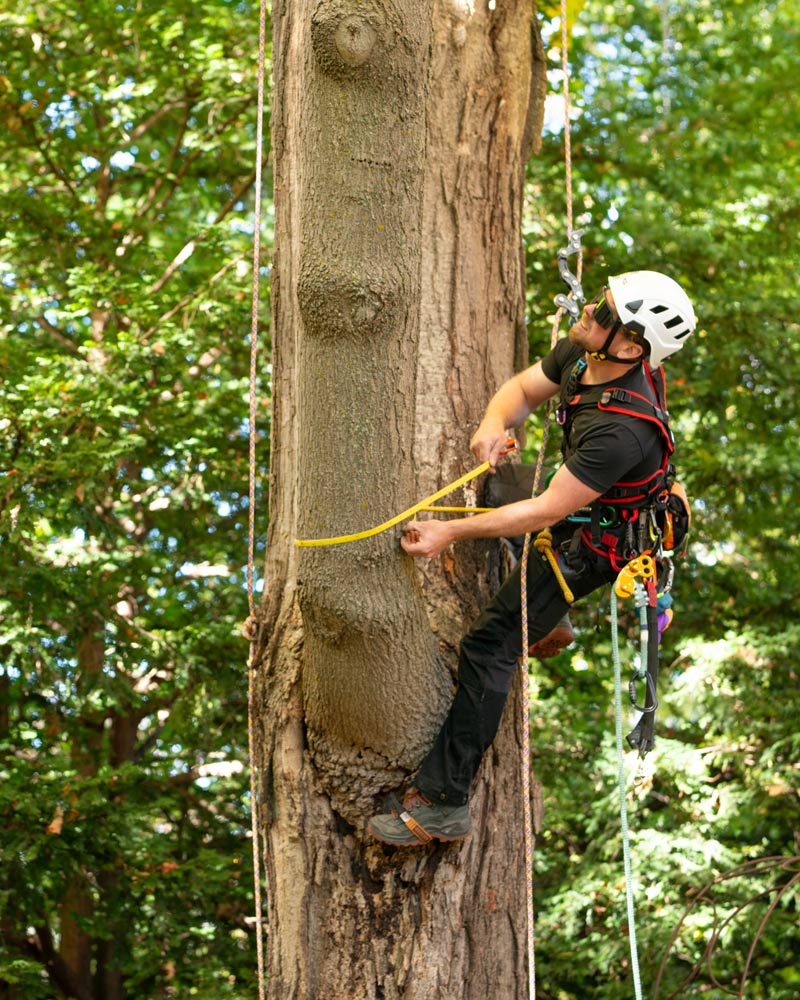
ArboMedic was founded in Montreal to serve residential and commercial property owners, cities and other arborists. Our years of field experience caring for trees and constant efforts to keep up with current arboricultural science are the driving force behind the company. We provide information on tree health and risk, the monetary value of trees, answer questions about pruning and tree care and protect trees during construction projects. This is all accomplished by providing comprehensive written reports that can be easily understood and used by homeowners, city officials, arborists and construction professionals. Great damage is done to trees due to improper pruning ignoring their needs during construction. The urban reality is that trees need help to survive long enough to provide us with their environmental, social and economic benefits. Our answer to these problems is to motivate and provide the means for others to increase their knowledge and skill in caring for the urban forest. At ArboMedic we are all about healing the disconnect between trees and people.
Qualifications

Over 15 years of experience in the tree care industry.

  • ISA Board Certified Master Arborist
  • ISA Qualified Tree Risk Assessor
  • TCIA Certified Plant Health Care Technician
  • Qualified Aerial Rescue Technician
  • Over 20 000 hours of time logged in the field climbing and working on trees

Our Process: 4 Steps to a Comprehensive Assessment

We follow a systematic approach to ensure every assessment is accurate and defensible

1. Inquiry

Contact us by filling out our "Request a Consultation" form.

2. Consultation

We begin with an initial phone conversation to discuss your specific needs and project goals.

3. Site Visit

A Certified Arborist will visit your property to inspect the tree(s) and collect necessary field data.

4. Final Report

We deliver a detailed PDF report containing our findings, valuations, or preservation recommendations.
My Story

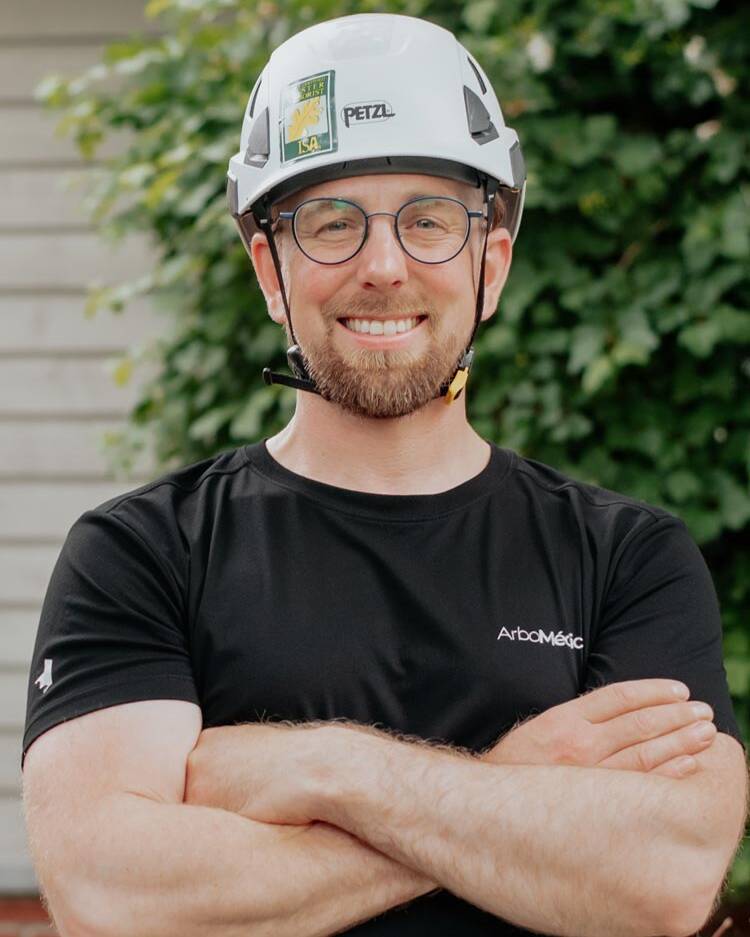
Hi, I’m James. I’m an ISA Board Certified Master Arborist from Montreal and owner of ArboMedic. In addition to being a master arborist I’m a certified plant health care technician, certified aerial rescue technician and qualified tree risk assessor. In the interest of keeping this a pleasant read I’ve decided stay informal and a bit more personal. First of all, what is a Board Certified Master Arborist? While the title sounds like a bit much, it basically means that I’ve logged over 20 000 hours working on trees, that I’ve had to pass extensive testing and that I’m required by the International Society of Arboriculture to put in at least 30 hours of academic learning (seminars usually) every year. So while the title sounds like big, what it really means is that I’m committed to learning as much as I can about trees in an academic setting but also by taking care of them, climbing them and working “on the tools” every day. If you are thinking “wow, this guy really has it together” I can assure you that life did not always revolve around trees for me. I began working with tools at a very young age (the result of growing up in a perpetual renovation) and after college just fell into being a carpenter. Even though I always found joy in building, something about my career wasn’t adding up. Years later, having moved to Calgary for work, a complete burnout stopped me in my tracks. As many in the tree care industry will tell you, becoming an arborist sometimes just happens to you, usually the result of life’s twists and turns. I didn’t know it at the time, but as my previous career ended, I was about to find a passion I didn’t even know existed yet. I have to give props to my cousin and friend Jarrett from Total Tree Solutions for setting me on this path. One day the phone rang as I was laying around in a burnout state feeling completely sorry for myself. He said “hey, you should do something. You can’t sit around all day. I need a guy to drag branches.” I told myself what the heck, might as well. The decision absolutely changed the way I perceived work. The hard days that seemed physically draining and impossible became rewarding. Dragging branches turned into climbing trees and my desire to understand and properly care for trees grew. As I began to ask questions about the how’s and why’s behind what an arborist does, I realized that if I wanted to treat trees properly, I would have to study the science behind how they function. I quickly noticed that any work carried out on trees absolutely needs to be centered on a solid foundation of knowledge. That being said, it brings me great sadness to see the poor treatment of many beautiful urban trees. The combination of improper pruning and a lack of effort to protect trees during construction and landscape projects is deadly. People often see trees as something that is in the way, or as an inconvenience. This mindset results in brutal treatment of trees with no thought to the way they actually work and more often than not increases tree related risk to people and property. The reality is quite the opposite. If a tree has been properly pruned it should be hard to see what the arborist has done. If a tree’s root system is properly protected during construction its chances of survival are higher. Many myths and a lot of false information about how trees function contribute to their poor treatment. My true goal and desire is to spread the knowledge of how to properly care for trees as far as I can. Eleven years after starting on my path from branch dragger to master I can look back at my own shortcomings over the last decade and say with complete conviction that field experience combined with the right academic knowledge is the key to proper care for trees. Saying “I’ve been doing the work” for twenty years isn’t enough. That’s why I push myself to keep learning (which I’m sure will never end) for the good of the urban forest that benefits us all so much. If you have made it to the end of this, I just want to say thanks for stopping in. Whether you are a prospective client or perhaps another arborist seeking knowledge please don’t hesitate to reach out for a chat. I’m always willing to talk trees. My hope is that my experience, knowledge and passion can help you make informed decisions regarding the care of your trees. Cheers,James Joest 

Frequently Asked Questions

Tree consulting is a niche field, and many property owners aren't sure where we fit into their project. Here are the answers to the questions we hear most often.

Contact us

Think of it like the difference between a Doctor and a Surgeon. A traditional tree service usually focuses on the physical labor—climbing, pruning, and removals. As consultants, we provide the diagnosis and the strategy.

Because we don’t make money from the removal itself, our advice is 100% unbiased. We are here to tell you if a tree actually needs to come down or if it can be saved with the right care.

Before the first shovel hits the dirt. Ideally, we should be involved during the site planning phase. By the time the heavy equipment arrives, it is often too late to protect the roots. Early intervention allows us to work with your architect to design a footprint that keeps your trees safe and your permits moving.

Most people assume a tree’s roots only go as far as the branches (the “drip line”). In reality, they can extend much further. The Critical Root Zone is the “red zone” where the most vital, life-sustaining roots live.

If this soil is crushed by a bulldozer or dug up for a utility line, the tree might look fine for a year or two, but it has essentially been “suffocated” or “starved.” We identify these zones early so they can be fenced off and protected.

It depends on the tree. A healthy, mature canopy can add between 7% and 19% to your property’s total market value. Replacing a 40-year-old tree is incredibly expensive (and takes 40 years). We help you determine the Appraised Value of your trees so you can decide if preservation is a smart financial investment.

We focus exclusively on consulting, reporting, and oversight. This allows us to act as your independent advocate. We can write the technical “Certified Work Plan” for your project, and then you (or we) can hire a qualified tree service to execute that plan under our supervision. This ensures the work is done to the highest professional standards without “upselling.”

Our fees are based on the complexity of the site and the type of report required. For a standard residential health assessment, we typically charge a [Base Fee]. This includes a site visit and a verbal summary of our findings. Detailed written reports for permits or legal disputes are billed as a separate flat fee or hourly rate.

Privacy Preference Center