
Understanding Eutypella Canker in Your Maples

Maple trees are the crown jewels of many landscapes, and are present in Montreal in vast numbers but they face a slow-burning and structural threat that often goes unnoticed until it’s too late: Eutypella canker.
This serious, slow-acting fungal disease primarily targets the genus Acer, with sugar maples, Norway maples, and red maples being particularly susceptible. Because it is a perennial canker, it doesn’t just disappear; it grows year after year, slowly compromising the tree’s health and safety.
How to Spot the Canker
Eutypella canker is visually distinct if you know where to look and what to look for. Most infections are found on the main trunk or large branches, typically positioned between 2 and 12 feet from the ground.
Key visual signs include:
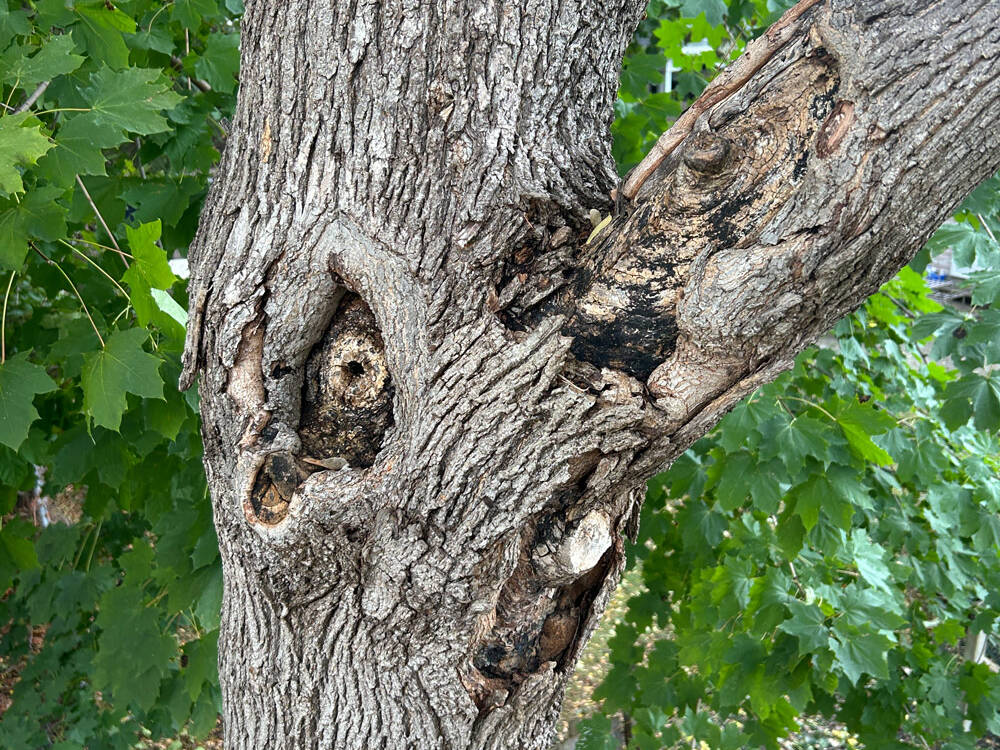
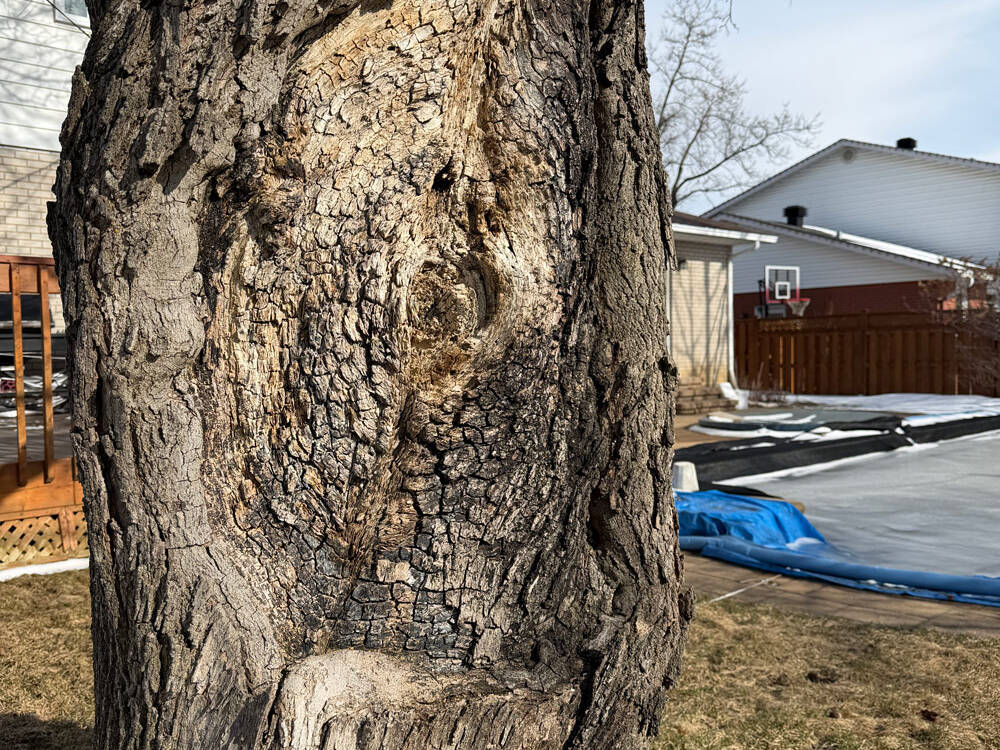
- The “Bull’s-Eye”: The most famous feature is a large, rough, elliptical canker that develops a target pattern of concentric rings.
- Sunken Centers & Callus Ridges: The center of the canker usually appears flattened or sunken, surrounded by thick, swollen rings of wound wood (callus) where the tree is trying to fight off the infection.
- Attached Bark: While many other cankers cause bark to fall away, the dead bark over a Eutypella infection remains tightly attached for years, appearing dry and brittle.
- The Central Stub: Often, you will see a dead branch stub or an old wound right at the exact center of the canker.
- Fungal Indicators: If you were to peel back the bark at the edge, you’d find a creamy white fungal mycelium fan. In older infections (over 5 years), tiny black, gritty fruiting bodies called perithecia emerge, giving the center a sooty appearance.
Why Is It Dangerous?
The risks associated with Eutypella canker depend largely on the age of the tree:
1. In Young Trees:
The fungus can completely girdle the trunk, effectively cutting off nutrients and killing the tree.
2. In Mature Trees:
The primary concern shifts to structural integrity. The canker causes significant internal weakness, creating a high risk of trunk failure (breaking), which can be catastrophic during storms.
How the Infection Spreads
Knowledge is the first step in prevention. The fungal pathogen, Eutypella parasitica, spreads its spores via wind and rain. These spores enter the tree exclusively through wounds or freshly cut branch stubs.
Expert Tip: Maintaining your trees through proper pruning is vital. Trees with small, fast-healing wounds from clean cuts are much less susceptible than those with jagged, large stubs that provide a perfect entry point for the fungus. Avoiding large pruning cuts is also very important. On properties with densely packed maple trees, it’s essential to remove cankered limbs or extremely affected trees as the fungal spores will spread readily within a 100-foot radius.
Next Steps for Homeowners
If you notice a “bull’s-eye” pattern on your maple, it is time to consult a professional. Because of the risk of trunk failure, an assessment by a certified arborist is essential to determine if the tree can be managed or if it poses a safety hazard to your property.

Related Posts
Fire Blight: The Scorched Earth Threat to Your Landscape
In the world of arboriculture, few things are as disheartening as watching a…

What is Proper Tree Planting?
We’ve all seen it: a beautiful new tree is planted in a front yard, only to die…