
The 100-Year Investment: Why "Proper" Tree Planting Is More Than Just Digging a Hole

We’ve all seen it: a beautiful new tree is planted in a front yard, only to die soon after. Most people blame the weather or “bad luck.” As arborists, we know the truth—the fate of a tree is usually decided in the first 60 minutes it spends in the ground.
Planting a tree is an act of optimism, but without the right technique, it’s an expensive mistake. Here is the professional’s guide to planting a tree that will actually outlive you.
1. The "Goldilocks" Hole: Not Too Deep
The most common mistake in DIY (even professionals can be guilty of this) planting is digging a hole that is too deep. Trees don’t breathe like we do; their roots need oxygen.
- The Rule: You should always be able to see the Root Flare (where the trunk widens at the base) at or slightly above the soil surface.
- The Math: Dig a hole that is 2 to 3 times wider than the root ball, but no deeper than the root ball itself. This creates a “soft zone” for new roots to expand into while ensuring the tree doesn’t sink and suffocate.
- Warning: Trees from nurseries often (when I say often, I mean really often) come too deeply set in containers or root balls. It’s important to remove the excess soil and find the root flare before calculating the depth of planting.
2. Identify the "Prisoner Roots"
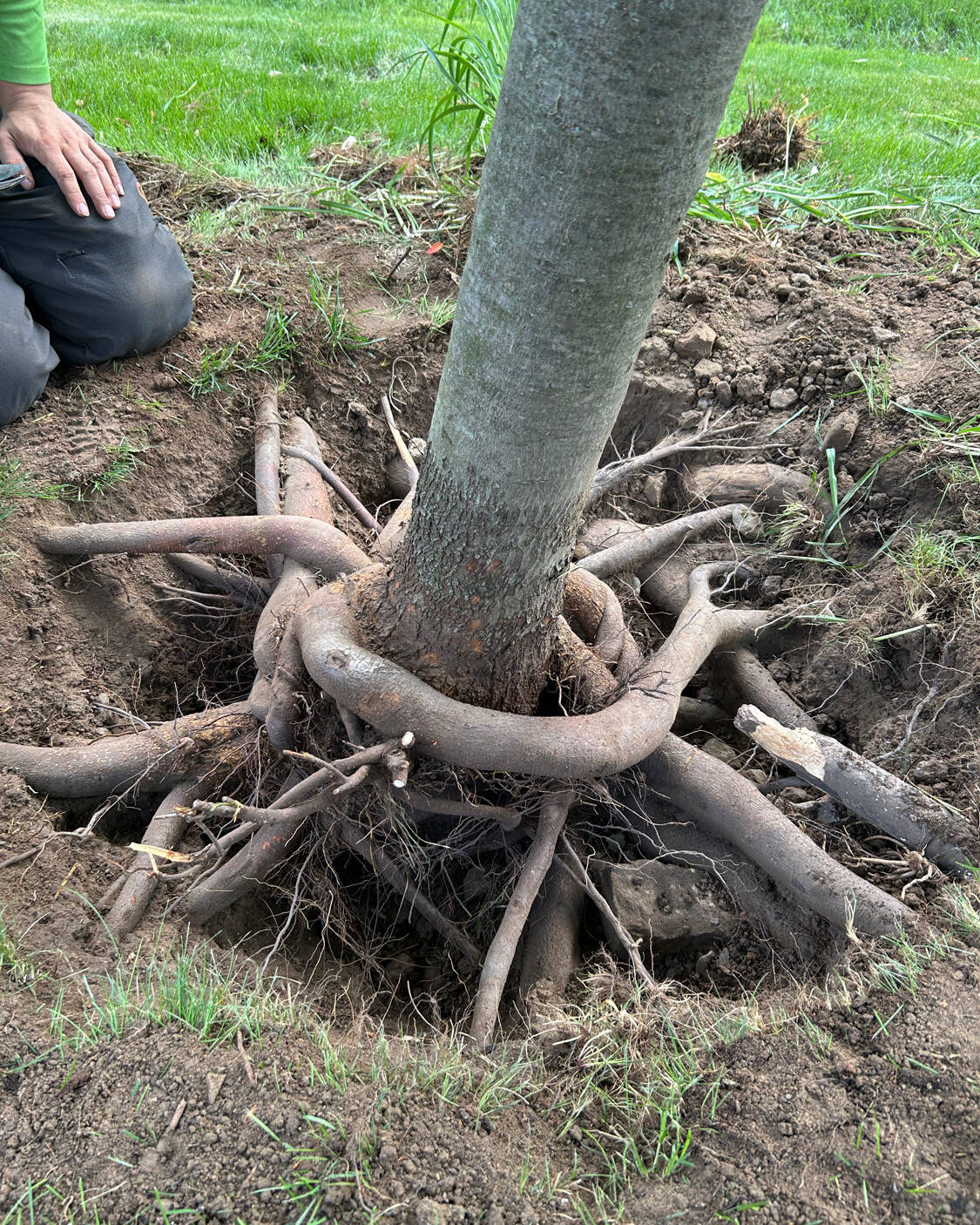
If you bought your tree in a plastic container, the roots have likely started growing in a circle around the sides of the pot. This is called girdling. If you don’t disrupt this pattern, the roots will eventually act like a slow-motion noose, choking the trunk (and other main roots) as the tree grows.
- The Fix: Gently tease the roots outward. If they are woody and stubborn, use a clean knife to make a few vertical slices in the root ball. This signals the tree to sprout new, outward-growing roots.
3. Remove the "Cage"
For B&B (Balled and Burlapped) trees, the wire basket and burlap are designed for transport, not for life in the ground. While some say burlap “rots away,” it often takes far too long, creating a barrier for fine feeder roots.
Pro Tip: Once the tree is positioned in the hole, cut away at least the top third of the wire basket (more if possible) and remove the burlap. This ensures the most active part of the root system has a clear path to the surrounding soil. No twine, burlap or wire basket should remain above the top third of the root ball.
4. Backfill with Care (No Fancy Soil Needed)
It’s tempting to fill the hole with expensive potting soil and fertilizer. Don’t do it. You want the tree to get used to the “real world” soil of your yard. If the hole is too “rich,” the roots may never want to leave the hole, creating a “pot-bound” effect in the ground.
- Use the soil you dug out.
- Break up large clumps.
- Water the soil halfway through backfilling to remove air pockets (don’t stomp on it—that compacts the soil!).
5. The "Donut," Not the "Volcano"
Mulching is the best thing you can do for a young tree, but Mulch Volcanoes (piling mulch high against the trunk) are tree-killers. They hold moisture against the bark, leading to rot and fungal disease.
- The Goal: A 2-to-3-inch layer of organic mulch spread in a wide circle.
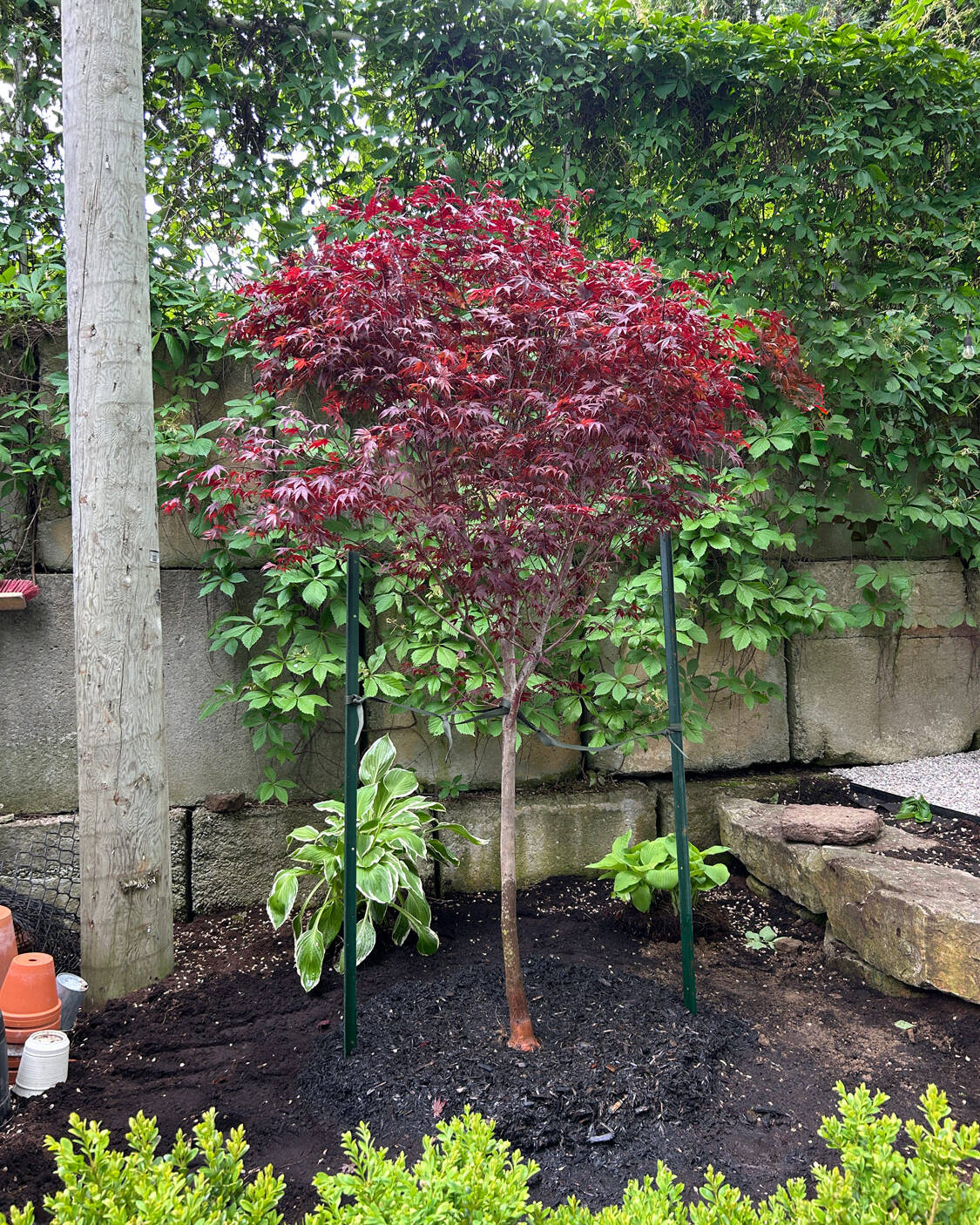
- The Shape: Keep the mulch a few inches away from the trunk itself. It should look like a flat donut, not a mountain.
6. To Stake or Not to Stake?
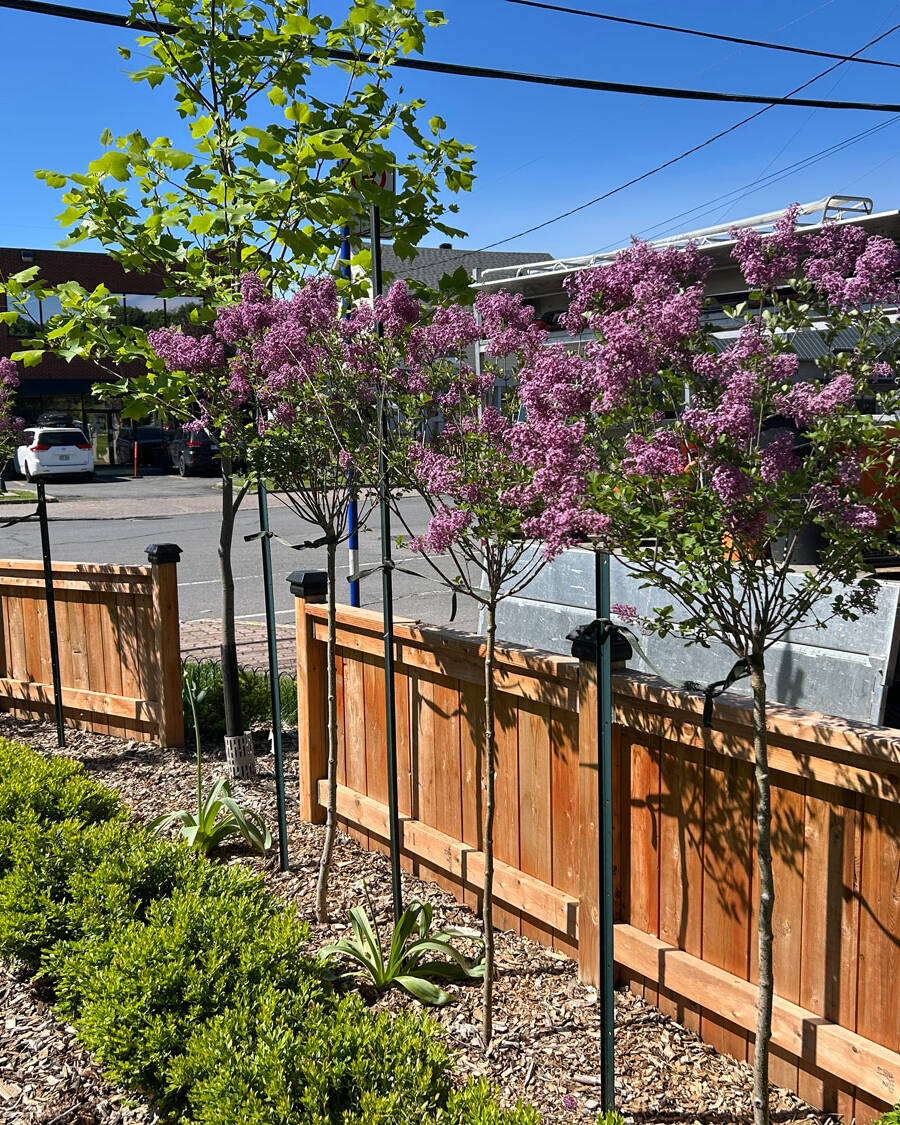
Most trees don’t actually need stakes. In fact, a tree that is allowed to sway slightly in the wind develops a stronger, thicker trunk (called “taper”). Only stake if the site is extremely windy or the tree is top-heavy, and always remove the stakes after one year.
The Bottom Line
A tree is the only asset on your property that grows in value every year. Spending extra time or money to plant it correctly today saves you thousands of dollars in removal and replacement costs a decade from now, which would also be a sad waste of growing time.
Unsure if your site is ready for a new tree? We provide Pre-Planting Consultations to help you select the right species for your soil type and space. Let’s make sure your next tree is a 100-year success story.

Related Posts
Fire Blight: The Scorched Earth Threat to Your Landscape
In the world of arboriculture, few things are as disheartening as watching a…

Spring Time Tree Checklist
Spring in Montreal is a high-stakes season for trees. After months of surviving…