

Spring Awakening: A Homeowner’s Guide to Tree Health Assessment
Spring in Montreal is a high-stakes season for trees. After months of surviving freezing temperatures, heavy ice, and salt spray, your trees are finally waking up. For a homeowner, this is the most critical time to perform a “reality check” on your landscape.
Catching a structural defect or a health issue in May can save you from a costly “whoops” moment during a summer storm in July. Here is what you should be looking for as the snow melts.
1. The Leaf-Out Race
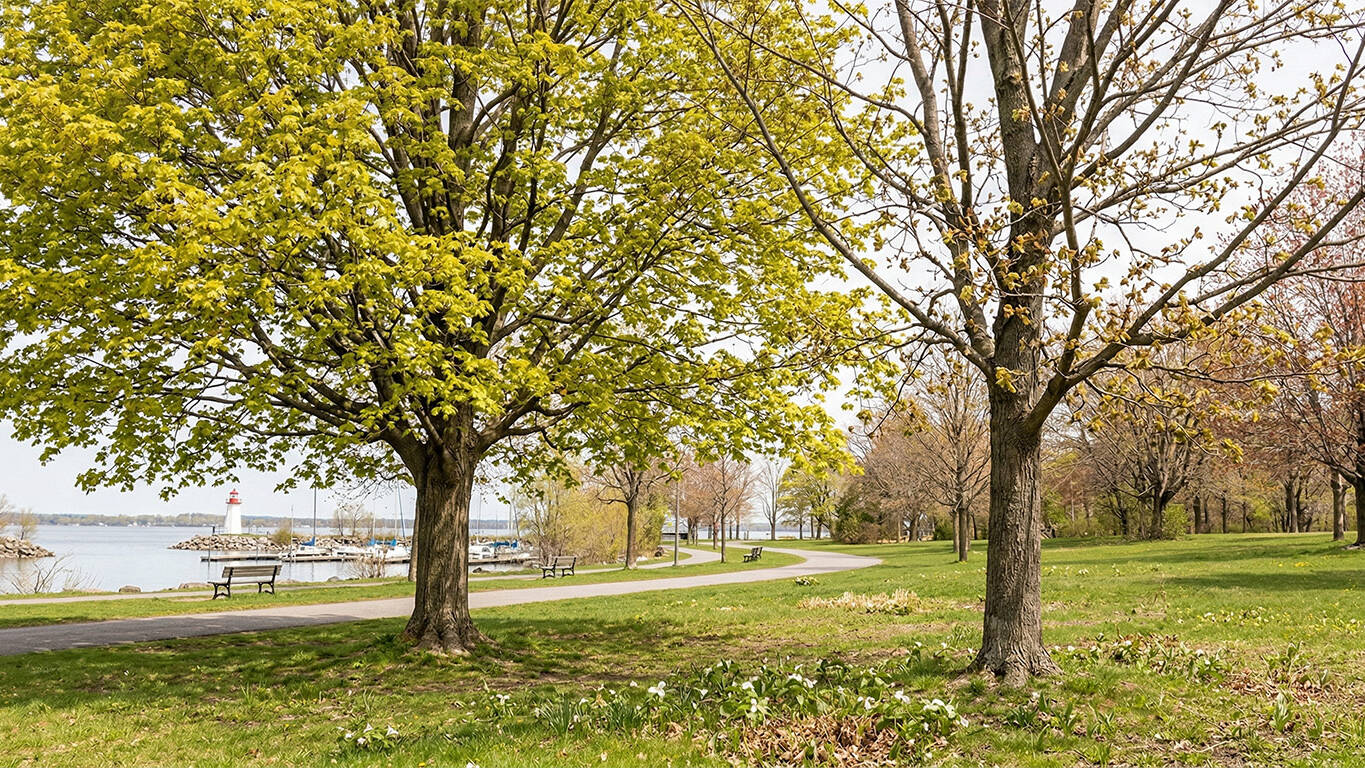
As the weather warms, keep an eye on when your trees begin to leaf out. If you have two Maples of the same species and one is fully green while the other is still bare, the tree is telling you it’s stressed. Late leaf-out, or leaves that are smaller than usual, is often the first sign of root damage or a lack of stored energy.
Take a look at the very tips of the branches. If you see “deadwood”—branches that are brittle and lack any green growth—it’s time for an assessment. These are the limbs most likely to become “targets” during the next high-wind event.
2. Bark and Trunk Integrity
Winter is hard on tree bark. Look for new vertical cracks, which can be caused by “frost cracks” (rapid temperature changes) or, more seriously, internal structural failure.
Pay close attention to any “weeping” or oozing spots on the trunk. If you see liquid staining the bark, it could be a sign of pathogens that have taken advantage of the tree’s dormant state. Also, keep an eye out for “conks”—shelf-like mushrooms growing directly out of the trunk. These are the visual indicators of internal rot. If you see a mushroom on your tree, it’s not just a fungus; it’s a warning.
3. The Root Plate Inspection
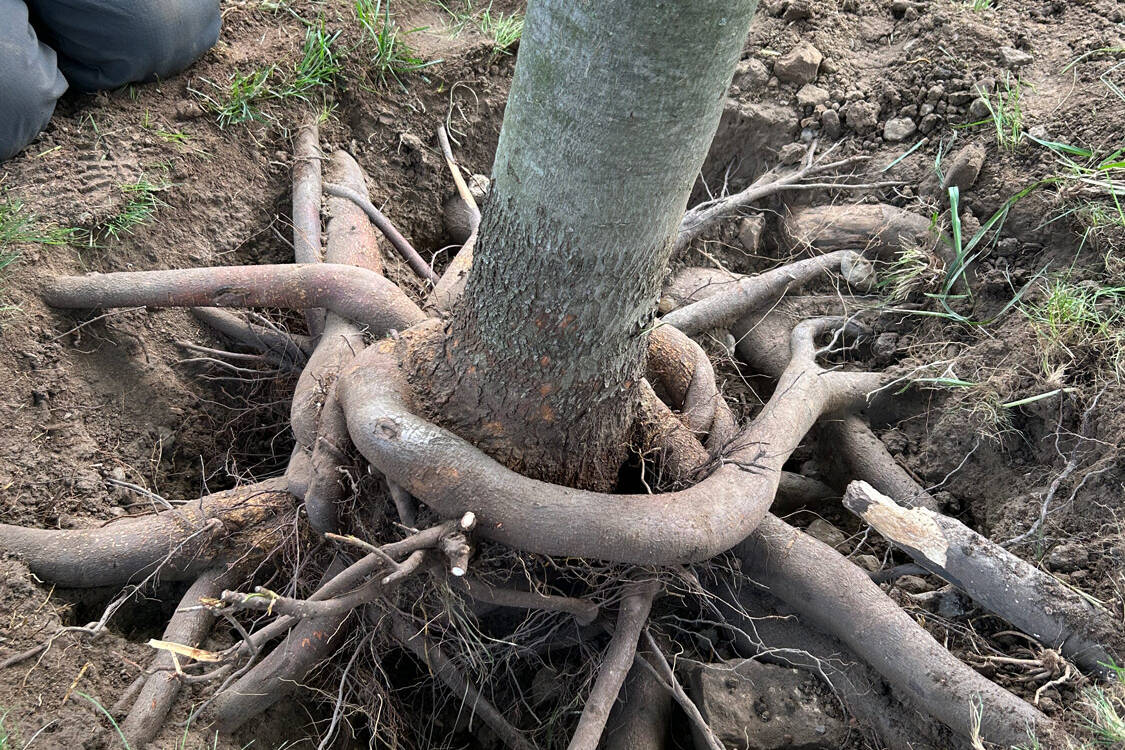
The ground is soft in the spring, which makes it the best time to check the stability of the root system. Look for “heaving” soil—cracks in the earth near the base of the tree that look like the tree is trying to lift itself up.
If you notice mushrooms growing in the grass near the base of the tree, these are often “fruiting bodies” of root-rot fungi. Because roots are the anchors of your biological assets, any compromise here is a high-priority risk that needs a professional eye.
4. Construction Prep
If you are planning a renovation, a new deck, or even just some “creative” landscaping this summer, now is the time to establish your Tree Protection Zone (TPZ). Most tree deaths on residential properties aren’t caused by old age; they are caused by a “whoops” moment where a truck parked on the roots or a trench was dug too close to the trunk.
Protecting your canopy before the “heavy metal” of construction arrives is the single best investment you can make in your property’s long-term equity.
Conclusion
Your trees are more than just scenery; they are assets that require proactive management. If something looks “off” during your spring walk-through, don’t guess. A professional evaluation provides the data-driven documentation you need to move forward with confidence.

Related Posts
Fire Blight: The Scorched Earth Threat to Your Landscape
In the world of arboriculture, few things are as disheartening as watching a…

What is Proper Tree Planting?
We’ve all seen it: a beautiful new tree is planted in a front yard, only to die…