
Beating the Heat: How Arborists Can Spot, Prevent, and Treat Heat Stroke Aloft and On the Ground

For an arborist, a heatwave isn’t just uncomfortable; it’s a critical safety hazard.
While most people can retreat indoors during Montreal’s intense summer humidity, our job mandates that we operate in the direct sun, performing extreme physical labor. Add mandatory PPE (helmets, chainsaw pants, boots) and the intense focus required to work aloft, and it is easy to understand why arborists are at an elevated risk for heat-related illness.
The most severe of these is Heat Stroke. Unlike heat exhaustion, heat stroke is a medical emergency that can be fatal if not treated immediately.
Here is what every professional arborist team needs to know about spotting, preventing, and treating heat stroke on the worksite.
1. Defining the Threat: Heat Exhaustion vs. Heat Stroke
It is vital that you and your crew can distinguish between “getting too hot” and a life-threatening crisis.
- Heat Exhaustion is your body’s distress signal. Symptoms include heavy sweating, cold/clammy skin, nausea, dizziness, and muscle cramps. This requires immediate mitigation (rest and shade), but it is not heat stroke.
- Heat Stroke occurs when your body’s temperature-regulation system fails. Your core temperature skyrockets (often above 104°F / 40°C), and your brain begins to malfunction. This is when seconds count.
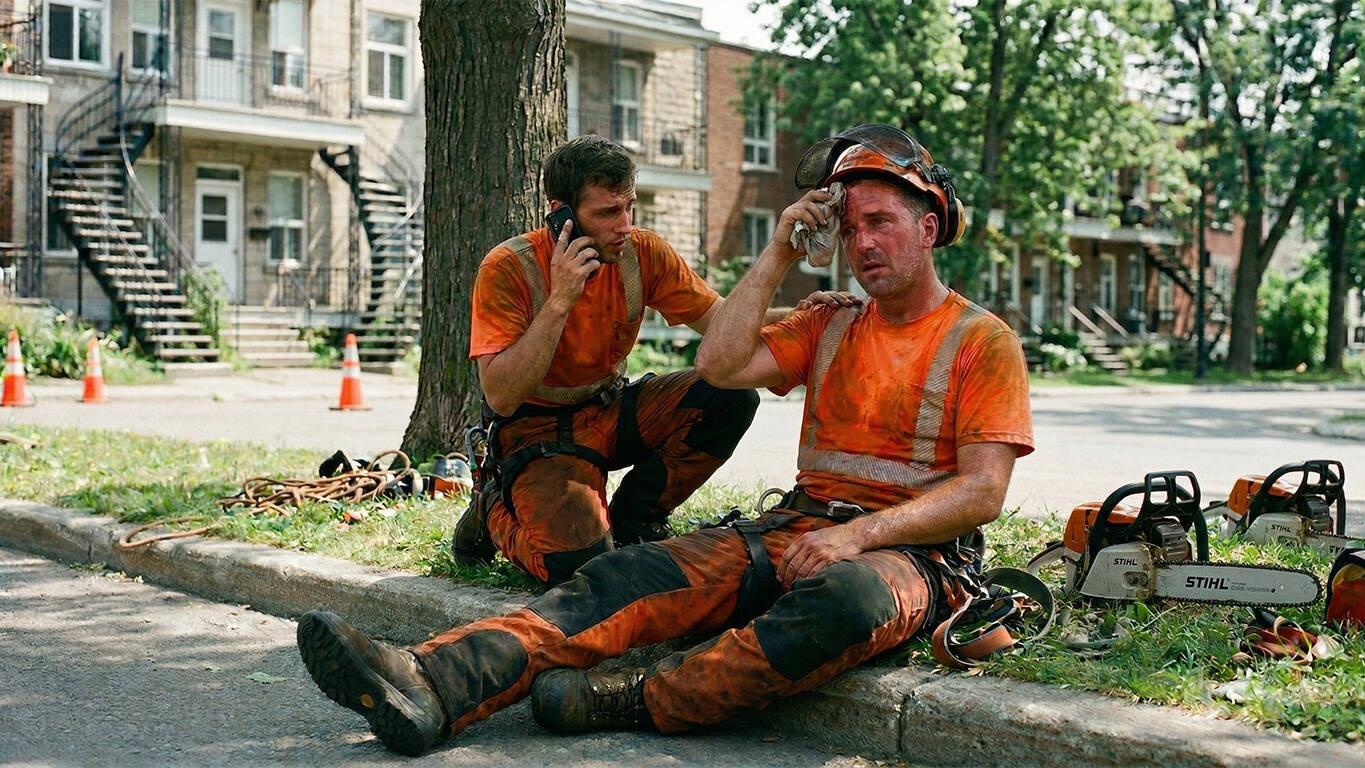
2. Spotting the Signs: What to Look for Aloft and on the Ground
As a “disciplined, safety-focused team,” the buddy system is your best diagnostic tool. You must watch your crewmates closely, particularly during extreme heat.
Aloft, a distressed climber might stop communicating, make erratic movements, or appear lethargic.
The “Red Flag” Symptoms of Heat Stroke include:
- Mental Confusion/Alteration: This is the primary indicator. Look for slurred speech, irrational behavior, combativeness, or profound disorientation.
- Loss of Consciousness: Fainting or the inability to stay awake. This is catastrophic if the arborist is currently climbing or in a bucket.
- Seizures: Uncontrolled convulsions.
- Hot, Dry, or Flushed Skin: Although a victim can still be sweating, their skin is often distinctively red, dry, and hot to the touch.
- Rapid, Racing Heartrate: The heart is overworking to pump blood to the skin to cool off.
- Intense Headache & Dizziness.
Master Arborist Tip: If your climber stops responding clearly on the comms, or if their movement patterns change dramatically, treat it as a heat emergency until proven otherwise.
3. Preventing the Crisis: Acclimatization, Hydration, and "Crew Watch"
Prevention is where professional discipline is defined. You cannot simply “power through” extreme heat.
Proactive Prevention Strategies:
- Acclimatization (The 1-Week Rule): This is the most critical step. Your body takes about 7 to 10 days to adjust to high temperatures. During early summer heatwaves, reduce workload and increase breaks for the first week to allow new crew members to acclimatize.
- Hydration is Non-Negotiable:
- Water is King: Drink water every 15–20 minutes, even if you are not thirsty. Do not wait for thirst.
- Electrolytes are Queen: Heavy sweating depletes vital salts (electrolytes). Incorporate sports drinks or electrolyte mixes to maintain balance.
- AVOID: Caffeine (a definite problem for me) and high-sugar energy drinks, which can worsen dehydration.
- Workload Scheduling: When possible, schedule the heaviest tasks—like large climbs and complex removals—for the early morning before the sun hits its peak. Save lower-exertion tasks (like chipping brush or hand-pruning smaller trees) for the afternoon.
- Mandatory Rest Breaks in the Shade: Do not allow crew members to skip breaks. Breaks must be taken out of the direct sun. In high heat, a 15-minute hydration and shade break every 90 minutes is a CNESST requirement.
- PPE Strategy: While safety gear is mandatory, choose lightweight, breathable chainsaw pants and shirts where possible, and take helmets off (sometimes I’ll even take my boots off) during ground-level breaks to release heat.
4. Treating the Emergency: Seconds Count (The "Cool Fast" Response)
If you suspect heat stroke, there is no time to debate. This is a life-or-death scenario.
Immediate Action Plan:
- Call 911 Immediately: Direct the designated Site Communications person (keep in mind this person must be chosen for every job site prior to work) to call Emergency Medical Services. Inform them you have a suspected Heat Stroke victim and provide your exact location.
- Move to Shade: Immediately move the victim to a shady area.
- Special Arborist Challenge: The Aerial Rescue. If the victim is still aloft:
- Activate your written Aerial Rescue Protocol. (You do have one written, practiced, and deployed on every job, right?)
- The most efficient method must be executed flawlessly by the designated Lead Rescuer.
- Warning: An unconscious climber is much more difficult and dangerous to rescue. Your prevention and spotting protocols are designed to prevent this exact scenario.
- Cooling the Victim on the Ground (Fast Cooling is Key):
-
- Strip PPE: Immediately remove their helmet, chainsaw pants, boots, and any heavy outer layers.
- Cool Water: Soak their entire body with cool water. Use a hose, spray bottle, or buckets.
- Focus Areas: Apply ice or cold, wet cloths to the neck, armpits, and groin—areas with high blood flow.
- Fanning: Use a fan or a piece of cardboard to vigorously circulate air over their wet skin, which speeds up cooling through evaporation.
Crucial Warning: Do not try to force an unconscious or confused victim to drink water. They will likely choke, creating a secondary, immediate life-threatening emergency (aspiration).
Conclusion: Leading with Safety in the Heat
In arboriculture, safety isn’t just about helmets; it’s about operational discipline and situational awareness.
Heat stroke is preventable. By recognizing the specific risks of our trade, watching out for your crewmates, and having a rigid, practiced rescue response, you can ensure that your team operates at a national standard of excellence, even on the hottest days.
Operate with Intent. Operate with Safety.

Related Posts
Fire Blight: The Scorched Earth Threat to Your Landscape
In the world of arboriculture, few things are as disheartening as watching a…

What is Proper Tree Planting?
We’ve all seen it: a beautiful new tree is planted in a front yard, only to die…